0
Starting a new relationship can be exciting. You may be getting to know someone new, spending more time together, and building trust.
But when a relationship becomes sexual, it is also a good time to think about sexual health.
Many people have an STD or STI without knowing it. Some infections may not cause any clear signs. This means a person can feel completely fine and still have an infection.
That is why HIV and STD testing after a new relationship can be a smart and simple step.
In this guide, we will explain when testing can help, what tests you may need, and why timing matters.
A new partner does not mean that someone has an STD or HIV.
Testing is simply a way to know your health status.
Some STIs can have no symptoms. A person may not know they have an infection and may pass it to a partner without realizing it.
Testing can give you useful information and help you make better choices about your health.
It can also be helpful for couples who want to start a new relationship with more peace of mind.
There is no single testing day that works for every infection.
The right time depends on the infection, the type of test, and when the possible exposure happened.
This is sometimes called the window period.
HIV tests do not always detect an infection immediately after exposure.
For example, a laboratory antigen/antibody test using blood from a vein can usually detect HIV 18 to 45 days after exposure. A rapid antigen/antibody test using blood from a finger stick can usually detect HIV 18 to 90 days after exposure.
This is why testing too soon can sometimes give a negative result even when an infection is still too new to detect.
If you are unsure about the right time to test, speak with a healthcare professional.
HIV is only one infection that can be checked.
Depending on your situation, a healthcare professional may recommend testing for infections such as:
Chlamydia
Gonorrhea
Syphilis
Hepatitis B
Hepatitis C
HIV
The tests you need can depend on your age, sexual history, type of sexual contact, symptoms, and other risk factors.
Chlamydia and gonorrhea are common STIs.
Some people with these infections have no symptoms. Others may notice things such as unusual discharge, pain when urinating, or other changes.
If you think you may have been exposed, talk with a healthcare professional about which test is right for you.
Yes, it can still be a good idea.
Feeling healthy does not always mean that you do not have an STI.
Many STIs can have no symptoms. Testing can help you find an infection that you may not otherwise notice.
This is one reason regular STI testing is important for sexually active people.
If you had sex without a condom, or the condom broke, you may be worried about HIV or another STI.
Try not to panic.
The best thing is to understand what happened and get the right advice.
If you think you may have had a possible HIV exposure within the last 72 hours, speak with a healthcare professional or visit an emergency or urgent care service as soon as possible.
HIV PEP is medicine that can help prevent HIV after a possible exposure. It needs to be started within 72 hours, and starting sooner is better.
A home test should not delay getting medical help when PEP may be needed.
Some HIV tests are designed for self-testing or use outside a traditional clinic.
Home testing can be useful for people who want a private and convenient way to start the testing process.
However, it is important to follow the product instructions carefully.
If an HIV self-test gives a positive result, it needs follow-up testing with a healthcare provider to confirm the result.
Before using any home test, check:
Make sure the test has not expired.
Do not use a test if the package looks damaged or opened.
Read the instructions carefully and follow the steps exactly.
Make sure you understand the window period for the type of test you are using.
If you are looking for testing products, you can visit Gulf Test Zone to explore the available options.
You can also visit the Gulf Test Zone All Products page to see different test kits.
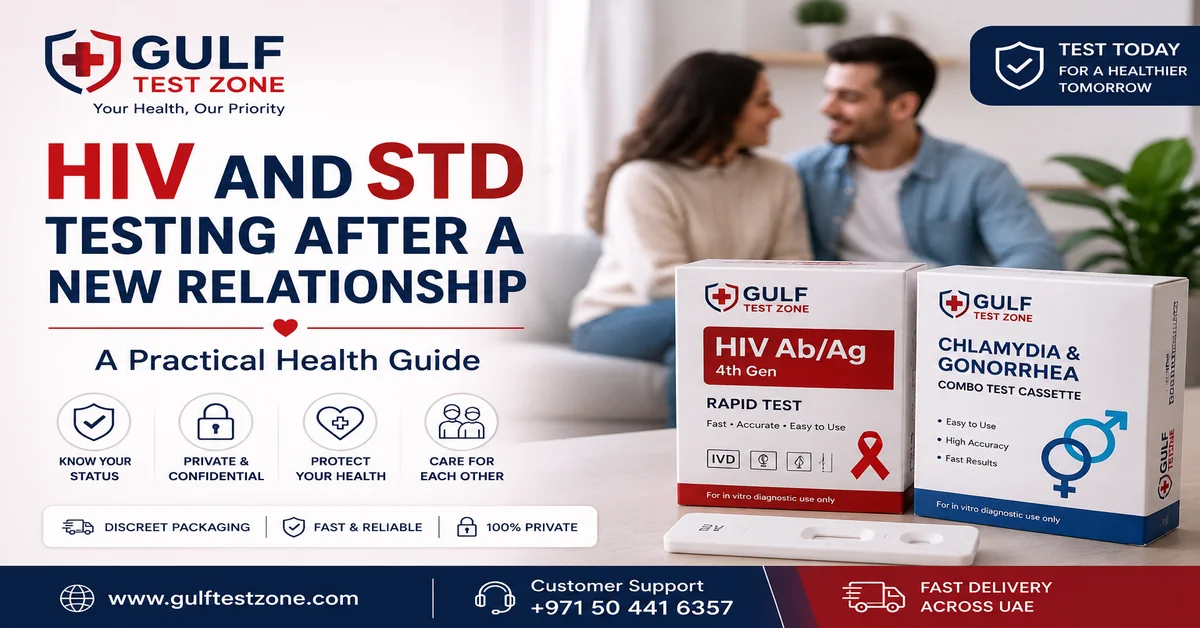
For people looking for an HIV antigen/antibody testing option, you can check the HIV Ab/Ag 4th Gen Rapid Test product page and read the product information before ordering.
For chlamydia and gonorrhea testing, you can also check the Chlamydia & Gonorrhea Combo Test Cassette.
Always read the instructions supplied with the specific product before use.
First, do not panic. A screening test is not always the final answer.
For HIV a positive self test or rapid test needs follow up testing to confirm the result.
For other STIs a healthcare professional can explain what the result means and what treatment or follow-up may be needed.
If you receive a positive result, it is also important to follow medical advice about informing sexual partners and avoiding passing the infection to someone else.
A negative result can be reassuring, but timing matters.
If you tested very soon after a possible exposure, the infection may not yet be detectable.
For HIV the window period depends on the type of test used. If you are testing early, ask a healthcare professional whether you should test again later.
A new relationship is a good time to talk about sexual health.
HIV and STD testing does not have to be scary or complicated. It is simply a way to learn more about your health.
Remember these simple points:
Some STIs have no symptoms.
Different infections need different tests.
HIV tests have a window period.
Follow the instructions on your test.
A positive HIV self-test needs follow-up testing.
If a possible HIV exposure happened within 72 hours, ask about PEP quickly.
Being open about testing can help both partners make informed and responsible choices.
If you are looking for home testing options, explore Gulf Test Zone and read the product information carefully before choosing a test.
Order your discreet test kit today with fast delivery across the UAE.
Shop Now