
0
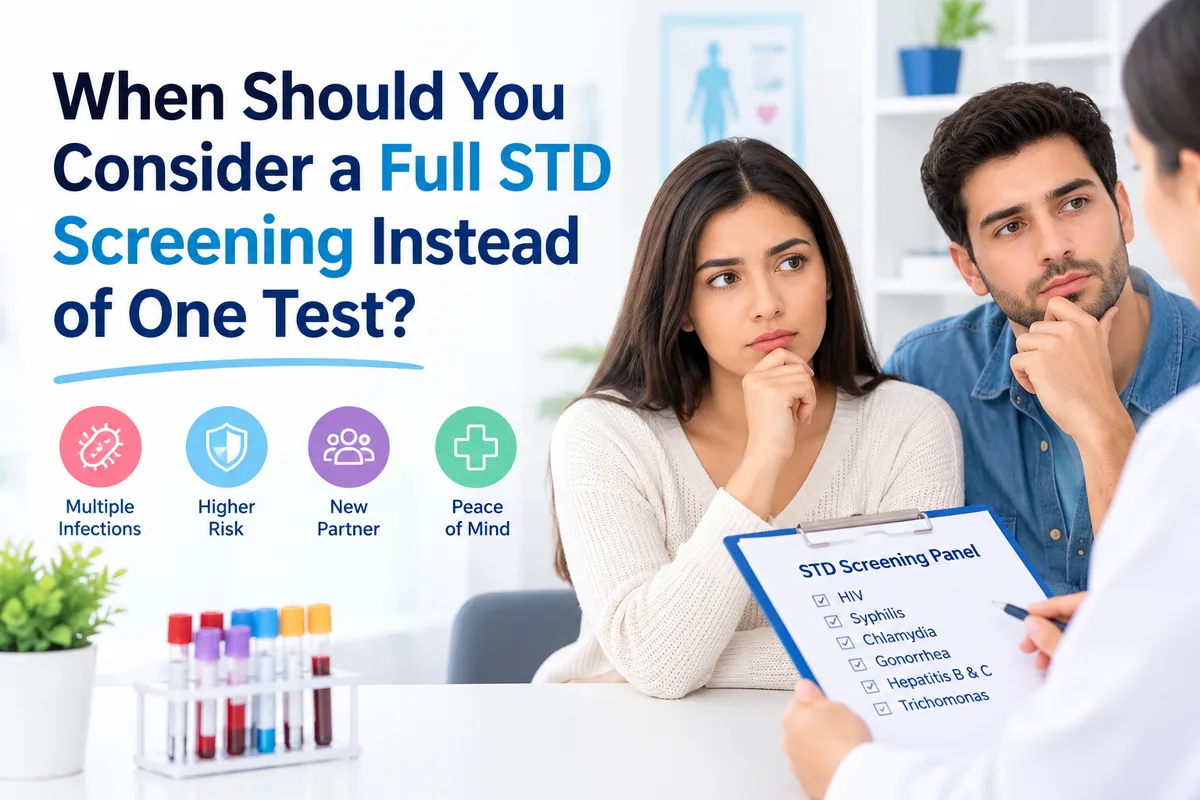
Sometimes, getting one STD test is enough. But that is not always the case.
Different sexually transmitted diseases (STDs) can affect the body in different ways. Some may cause signs like pain, itching, or unusual discharge. Others may cause no signs at all. This is why testing can be important especially when there may be more than one possible infection.
So, when should you think about a full STD screening instead of choosing just one test. Let’s look at it in simple words.
A full STD screening means checking for more than one sexually transmitted infection. A single test usually looks for one infection. For example a chlamydia test checks for chlamydia. A gonorrhea test checks for gonorrhea.
A broader screening may check for several common infections based on your situation, symptoms, and the advice of a healthcare professional. The exact tests included can be different from person to person.
It is easy to think that one negative test means everything is fine. But that may not always be true. There are many different STDs. Testing for one infection does not automatically check for another one.
For example a person may test negative for gonorrhea but still have chlamydia. Another person may have an infection without noticing any symptoms.
This is one reason why a wider screening can sometimes give a clearer picture.
If you had sex without a condom you may want to consider broader STD testing.
This is especially important when you do not know your partner recent testing history. One test may not cover all the infections that could be possible.
A healthcare professional can help you decide which tests are suitable and when they should be done.
Having a new sexual partner can be a reason to think about STD screening.
If you have had more than one partner, a wider screening may be more useful than testing for only one infection. This does not mean that you have an STD. Testing simply helps you know more about your sexual health.
Some common STD symptoms include unusual discharge, burning while urinating, sores, itching or pain.
But symptoms can have many causes, and some STDs may have no symptoms at all.
If you notice something unusual, avoid guessing the cause. A proper test can help identify what may be happening.
If your partner tells you they have an STD speak with a healthcare professional about testing.
In this situation testing for only one infection may not always be enough. The right tests depend on the infection involved and the type of sexual contact.
Sometimes there is no obvious symptom or known exposure. You may simply want to check your sexual health.
That is a reasonable reason to talk to a healthcare professional about screening.
Knowing what tests are appropriate can help you avoid unnecessary testing while making sure important infections are not missed.
This is worth remembering. Getting tested does not mean you have an STD. It is simply a way to learn about your health.
Many STD can be treated and some can be cured. Finding an infection early can also help you get the right care and reduce the chance of passing it to someone else.
Testing should not be something to feel embarrassed about.
Home testing can be a convenient option for some people. It can provide privacy and make testing easier for people who feel uncomfortable visiting a clinic.
You can explore different STD test kits and other self-testing products through Gulf Test Zone. The Gulf Test Zone all-products page also provides access to different testing options.
However, not every home test checks for every STD. Always read the product instructions carefully and understand what the test is designed to detect.
If you have symptoms, a known exposure, or a positive result, speaking with a healthcare professional is important.
Do not panic. A positive screening result does not mean you should ignore it or try to treat yourself. Follow the test instructions and contact a qualified healthcare professional for confirmation, advice, and treatment when needed.
Until you get appropriate medical advice it may also be sensible to avoid sexual contact or use protection to reduce the chance of passing an infection to another person.
Choosing between one STD test and a wider screening depends on your situation. If you have had unprotected sex, have a new or multiple partners, notice symptoms, have a partner with an STD, or simply want a broader health check, it may be worth discussing full STD screening with a healthcare professional.
One test can answer one question. A broader screening can look at several possible infections. The most important thing is to choose testing based on your actual situation, not just on symptoms. And remember, no symptoms does not always mean no infection.
Test when it makes sense, follow the instructions, and get professional medical advice when you need it.
Order your discreet test kit today with fast delivery across the UAE.
Shop Now