
0
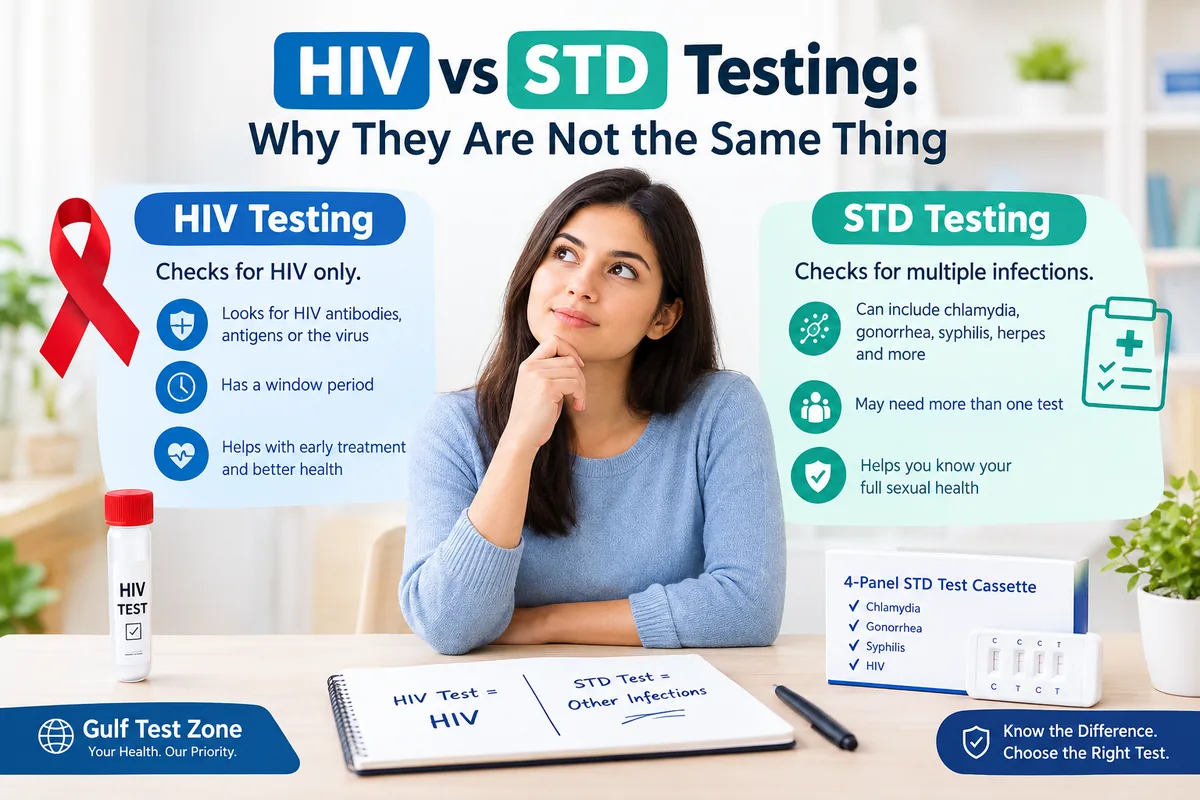
Many people think HIV testing and STD testing are the same thing. They are not.
HIV is one infection that can be passed through certain types of sexual contact and other ways. STDs, also called STIs, are a larger group of infections. Some common examples include chlamydia, gonorrhea, syphilis, and herpes.
This is why one test may not tell you everything about your sexual health. The right test depends on your situation, symptoms, and possible exposure.
HIV testing checks specifically for HIV (human immunodeficiency virus).
HIV affects the body's immune system. The only way to know your HIV status is to get tested. Modern HIV tests can look for HIV antibodies, HIV antigens, or the virus itself, depending on the type of test.
You can have HIV without feeling sick. This means a person may not know they have it.
Finding HIV early is important because treatment can help people with HIV stay healthy for many years. It can also greatly reduce the chance of passing HIV to a sexual partner.
One important thing to remember is that no HIV test can detect HIV immediately after infection.
Different HIV tests can detect infection at different times. For example, a laboratory antigen/antibody test can usually detect HIV 18–45 days after exposure, while antibody tests may take longer.
If you recently had a possible exposure, talk with a healthcare professional about which test is suitable and when you should test.
STD testing is different because it can check for different infections, not just HIV.
Depending on your situation, testing may include infections such as:
Chlamydia
Gonorrhea
Syphilis
HIV
Trichomoniasis
Herpes in certain situations
Not every STD test checks for every infection. A healthcare provider may recommend certain tests based on your symptoms, sexual history, type of sexual contact, and other risk factors.
Think of it like checking different doors in a house. Opening one door does not mean you have checked every room.
In the same way, a test for one infection does not automatically check for all other infections.
For example, an HIV test can tell you about HIV, but it does not automatically tell you whether you have chlamydia or gonorrhea.
That is why people who want a broader check may need multiple STD tests.
The easiest way to understand it is this:
HIV testing = checking for HIV.
STD testing = checking for one or more sexually transmitted infections.
Some STD screening packages may include several infections, but the exact infections included depend on the test or testing package.
If you are looking for different testing options, you can explore the STD testing products available from Gulf Test Zone.
Yes. This is one reason testing matters.
Some sexually transmitted infections may cause no clear symptoms. A person can feel completely normal and still have an infection. (CDC)
If you have symptoms such as unusual discharge, pain while urinating, sores, itching, or other changes around the genital area, speak with a healthcare professional and ask whether testing is needed.
You may want to talk to a healthcare professional about broader testing if:
You had sex without a condom.
You have a new sexual partner.
A partner told you they have an STD or STI.
You have symptoms.
You are worried about a recent sexual exposure.
You have had an STD before.
You simply want peace of mind.
The type of testing you need can change depending on your personal situation.
Here is the easiest rule:
HIV test checks HIV.
STD testing can check for other sexually transmitted infections.
They can be used together, but they are not automatically the same test.
If you are interested in a multi-infection testing option, you can also learn more about the 4-Panel STD Test Cassette. Always read the product information carefully and follow the instructions provided.
There is no need to feel embarrassed about STD or HIV testing. Testing is simply a way to learn more about your health.
If you are unsure which test you need, speak with a qualified healthcare professional. They can help you choose testing based on your symptoms, possible exposure, and health history.
For more testing options and information, visit Gulf Test Zone.
Remember: an HIV test and an STD test are not the same thing. Knowing the difference can help you choose the right test and take better care of your health.
Order your discreet test kit today with fast delivery across the UAE.
Shop Now