
0
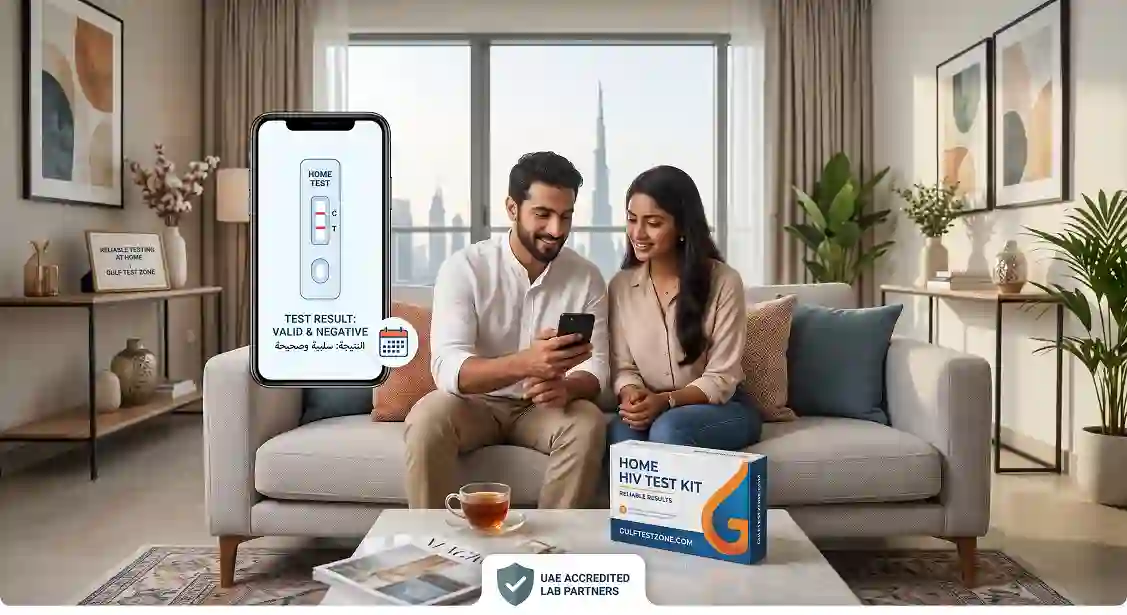
If you’re considering an HIV self-test, you’ve probably asked yourself this exact question. Can I really trust a result I get in my bathroom? Is a home test as reliable as a lab? What if it’s wrong?
It’s a fair concern. Your health — and your peace of mind — depend on a test you can believe in. The short answer is: yes, a CE-certified 4th generation home HIV test kit is extremely reliable when used correctly at the right time. In fact, the technology inside your home test is the same type used in clinics and hospitals worldwide.
Let’s break down exactly how home HIV tests work, how accurate they are, and how to make sure your result is one you can trust — here in the UAE.
GulfTestZone’s home HIV test is a 4th generation rapid immunochromatographic test. That’s the same scientific principle used in lab-based rapid screening devices. It detects two specific markers in your blood:
p24 antigen – A protein from the HIV virus itself. It appears in the blood as early as 10–14 days after infection, before your body has produced antibodies. This allows for earlier detection than older tests.
HIV-1 and HIV-2 antibodies – Proteins your immune system produces to fight the virus. Antibodies become detectable typically 3–4 weeks after exposure.
By detecting both antigen and antibodies, a 4th generation test covers two windows of infection, drastically reducing the chance of a false-negative result.
View the HIV 4th Gen Rapid Test Kit →
The accuracy figures speak for themselves.
| Test Type | When Used | Sensitivity | Specificity |
|---|---|---|---|
| 4th Gen Rapid Home Test | At 4 weeks post-exposure | ~95–99% | >99% |
| 4th Gen Rapid Home Test | At 6 weeks post-exposure | >99% (conclusive) | >99% |
| Lab ELISA 4th Gen Test | At 4–6 weeks post-exposure | >99.8% | >99.5% |
Key takeaway: At 6 weeks, a negative result on a 4th generation home test is considered conclusive by the same international guidelines (WHO, UK, EU) that apply to lab tests. You are not getting a second-class result — you are using the same detection technology in a different format.
A lab ELISA test offers marginally higher analytical sensitivity because it is processed by a machine, but the difference is clinically irrelevant for a negative screening result. If your home test is reactive, a lab ELISA (like our HIV 1/2 Combo ELISA Test Kit) is an excellent confirmatory second step before visiting a clinic.
No test is perfect, but incorrect results are almost always due to timing or user error, not the test kit itself.
Testing too early – The window period has not passed. The p24 antigen may not yet be at detectable levels. This is the most common cause. Always wait at least 4 weeks after possible exposure before testing. Learn more in our HIV Window Periods guide.
Incorrect sample collection – Not enough blood, squeezing the finger too hard, or not adding the buffer correctly. Follow the step-by-step instructions in our How to Use a Home HIV Test Kit guide.
This is very rare with 4th generation tests. However, certain medical conditions (autoimmune diseases, recent viral infections) or pregnancy can, in exceptional cases, trigger a false-reactive result. This is why all reactive home tests must be followed by a laboratory confirmatory test.
Every home HIV test kit supplied by GulfTestZone carries CE marking. This means the test meets the safety, health, and environmental requirements of the European Union’s In Vitro Diagnostic Medical Device Regulation (IVDR).
CE-certified rapid HIV tests are used in:
National health screening programmes across Europe, Africa, and Asia
WHO-approved self-testing initiatives
Hospital emergency departments for immediate preliminary screening
You are using a medical device that is trusted by healthcare professionals globally. The fact that it fits in your hand doesn’t change its scientific integrity.
The difference is not accuracy — it’s setting.
| Factor | Home Test (4th Gen Rapid) | Lab Test (ELISA) |
|---|---|---|
| Detection method | Antigen + Antibody | Antigen + Antibody |
| Sample type | Finger-prick blood | Venous blood draw |
| Processing | Manual, read visually | Automated machine |
| Time to result | 15–20 minutes | 2–7 days (with lab queue) |
| Privacy | Complete – you read it yourself | Medical record created |
| Cost | One-time affordable price | Clinic fee + lab fee |
If your home test is negative and you’ve tested after the appropriate window period, no further test is needed. If it is reactive, you proceed to a lab for confirmation — which is exactly the same pathway a reactive lab screening test would follow.
The World Health Organization strongly recommends HIV self-testing as a strategy to reach people who might otherwise avoid testing due to stigma, distance, or fear. Since 2016, over 100 countries have adopted HIV self-testing policies. In many nations, you can even pick up a free home test from a pharmacy.
In the UAE, where privacy is paramount, a home test allows you to know your status without walking into a clinic, registering your details, and waiting for a phone call. That’s not avoiding the system — it’s taking the first step on your own terms.
Here’s a quick checklist for confidence:
Wait for the window period. At least 4 weeks after possible exposure; 6 weeks for a conclusive result.
Read the full instructions before starting. Every step matters.
Check the expiry date on the sealed pouch. Store the kit in a cool, dry place.
Use a timer. Do not read the result before 15 minutes or after 30 minutes.
If reactive, confirm. Use a second test format (like our ELISA kit) or visit a laboratory.
Can I fully trust a negative result from a home test?
Yes. If you tested at 6 weeks or later after exposure, a negative 4th generation home test is considered conclusive by international clinical guidelines. No further routine testing is needed unless new exposure occurs.
Is the home test approved by UAE health authorities?
CE-marked devices are accepted for personal use in the UAE. The kits are not a substitute for mandatory government testing (e.g., visa medicals), but they are fully legal and reliable for private home screening.
What if I’m still within the window period?
A negative result before 4 weeks is reassuring but not conclusive. Repeat the test at 6 weeks for a definitive answer. Waiting is hard, but an accurate result is worth it.
Does the home test detect all HIV strains?
The 4th generation test detects HIV-1 (including Group O and subtypes) and HIV-2. It covers all clinically relevant strains.
Can I use this test for a premarital screening certificate?
No. For an official marriage certificate, you must undergo the government-mandated screening. However, a private home test beforehand lets you know your status in advance. Read our guide on HIV testing before marriage in the UAE.
The question isn’t really “can I test for HIV at home and get a reliable result?” — it’s “can I test for HIV at home and get the same reliable result as a lab?” And the answer is yes. The science is the same. The accuracy is the same. The only difference is that you’re in control.
Test with confidence. Test at the right time. And if you’re ready, your result is waiting — privately, in a plain package, delivered anywhere in the UAE.
Order your reliable HIV home test kit now →
Browse all HIV & STD test kits →
Disclaimer: This article is for informational purposes only. Home test kits are preliminary screening tools. All reactive results should be confirmed by a licensed medical laboratory. If you are experiencing symptoms or have had a high-risk exposure, consult a healthcare provider.
Order your discreet test kit today with fast delivery across the UAE.
Shop Now